Will My Teeth Be Shaved Down for Veneers?
This is the ultimate question to ask your dentist. The answer is yes and no — and the "no" part is more true than most patients expect.
With advancements in technology, we don't have to shave the teeth down as much. Because we can plan the case with the end in mind, we only take down the exact amount of tooth structure needed — down to a tenth of a millimeter in precision.
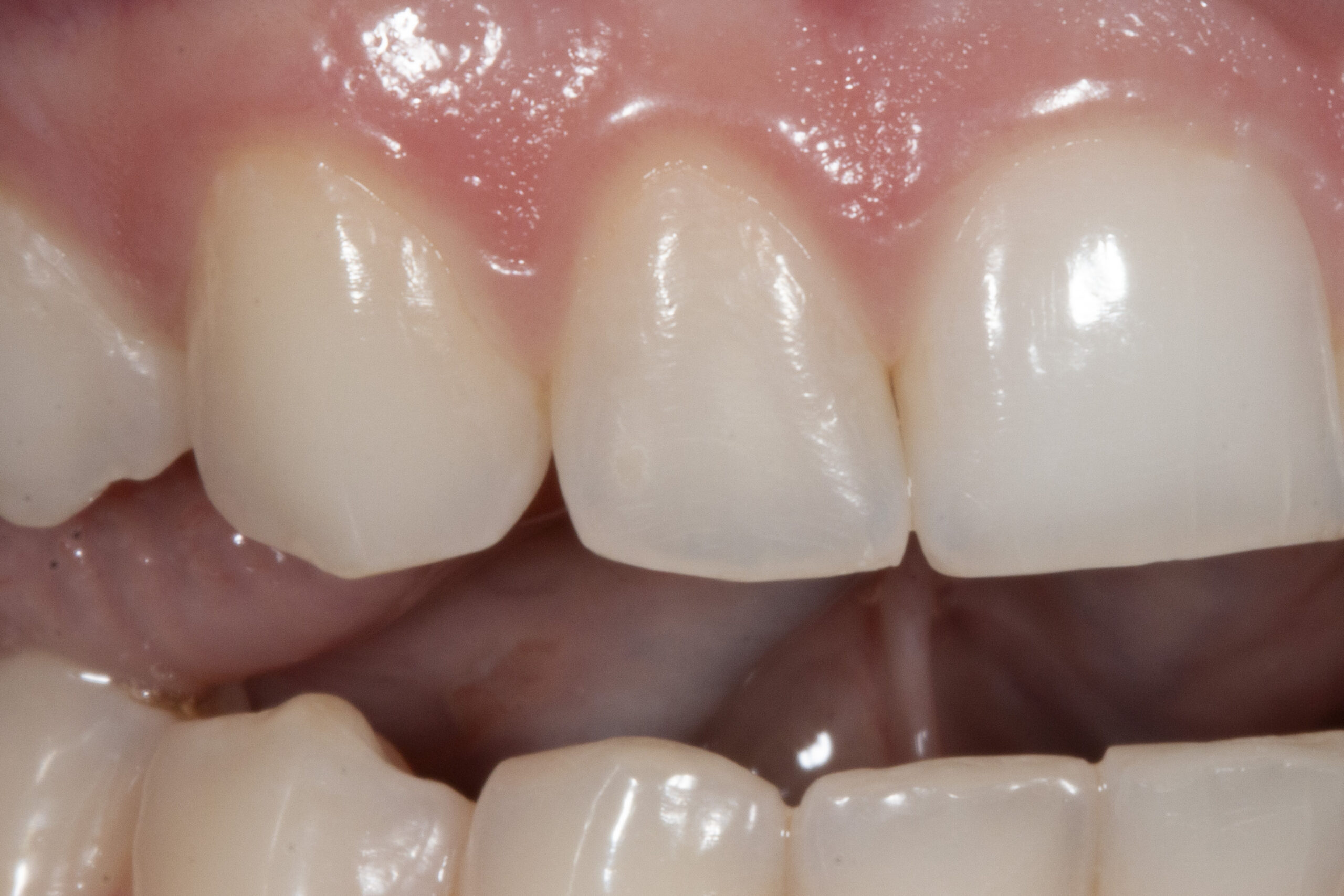
Pre-operative teeth, before any preparation
We always start with the end in mind. Before we ever touch a tooth, our ceramist and Dr. Driscoll design the case together, building a digital and physical blueprint of exactly how the final veneers should look, feel, and function.

A wax-up blueprint of the veneer design, created by the ceramist and doctor together
A wax-up is a diagnostic model that shows the proposed size, shape, and length of the final veneers before any tooth is touched. Dr. Driscoll and our ceramist design this blueprint together, and it becomes the foundation for every following step — including the mockup and reduction guide. This blueprint is then transferred to the mouth using a mold and a temporary material called bisacryl, allowing you to preview the design directly on your own teeth.

A mockup of the final veneers, placed directly over the natural teeth
A mockup is a preview of the final veneers placed directly over your existing teeth, before any tooth structure is removed. It shows exactly how the size, shape, and length of the final veneers will look on your smile, and it guides how much tooth reduction is actually needed.
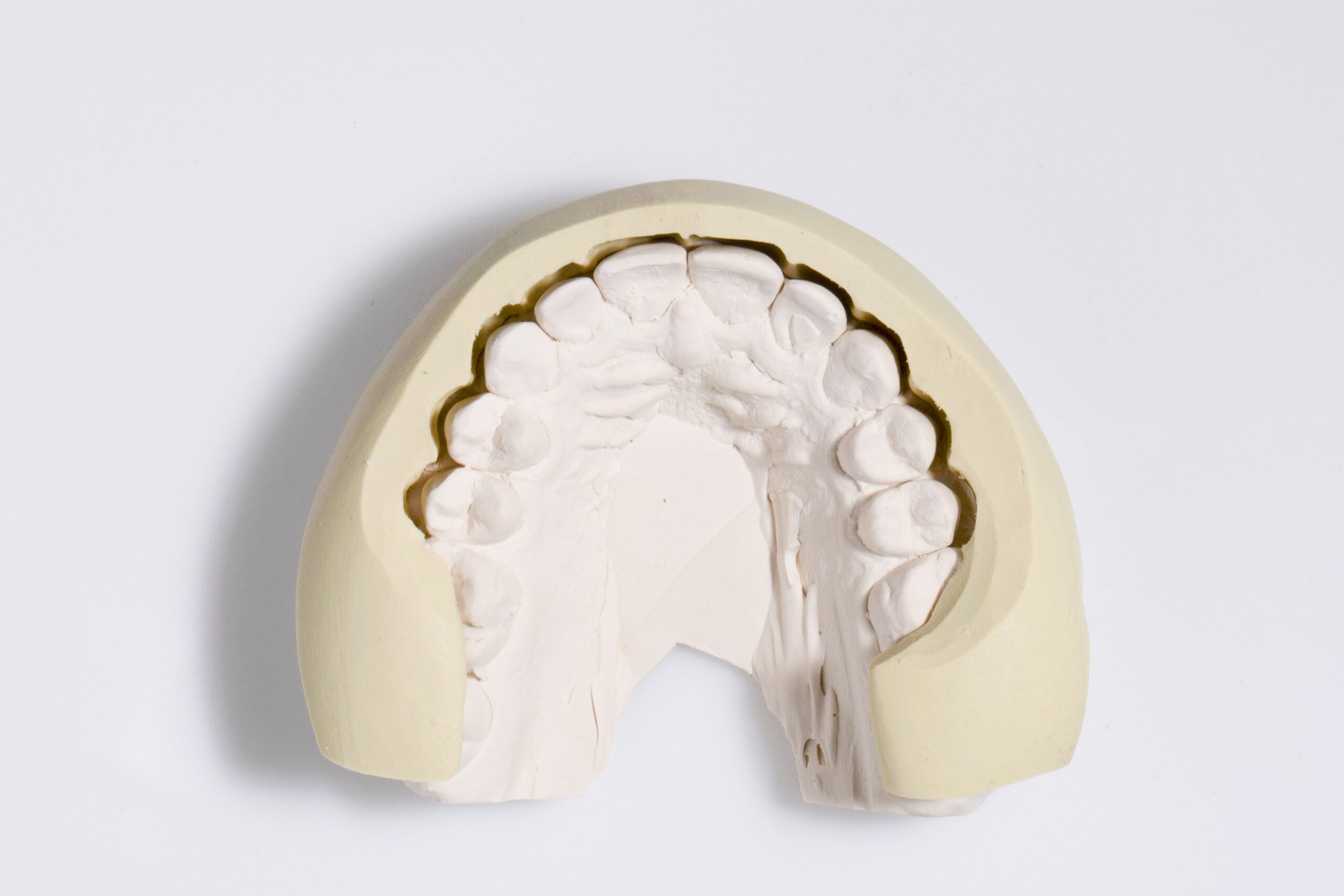
A reduction guide, used to confirm precise, minimal tooth reduction
Once the mockup is finalized, we create a reduction guide from it. This guide fits over the tooth during preparation and tells us exactly how much room needs to be left for the final porcelain — ensuring we remove only what's necessary, and no more, down to a tenth of a millimeter of precision.

A model of the prepared teeth, showing minimal, conservative preparation
This model shows the teeth after minimal, conservative preparation — illustrating exactly how little tooth structure is removed when the case is planned with the end result in mind from the very beginning.

Teeth with minimal preparation and retraction cord in place
A retraction cord is a thin, string-like material placed gently around the gumline. It pushes the gum tissue out of the way so we can capture a precise, accurate impression of the prepared tooth — critical for a well-fitting veneer.
Here's the part that matters most: we do everything we can to stay in enamel. Staying in enamel is the healthiest option for the long-term health of your tooth. Traditional veneers often require more aggressive reduction, and while we're still placing veneers, our approach is built around minimizing that reduction wherever possible. We believe in reducing the risk of damage to the tooth as much as possible, and health always comes first — even in cosmetic treatment.
Frequently Asked Questions
What are minimal prep or conservative veneers?
Minimal prep veneers (also called conservative veneers or no-prep veneers) involve reducing as little natural tooth structure as possible — often staying entirely within the enamel layer. This approach protects the long-term health of the tooth while still achieving a natural, well-fitted final result.
What is bisacryl and why is it used for veneer mockups?
Bisacryl is a temporary dental material used to transfer the wax-up design directly onto your natural teeth in the mouth. It allows you and your dentist to see and feel the proposed veneer design in real life before committing to any permanent tooth preparation.
How much of my tooth is actually removed for veneers?
With modern digital planning, tooth reduction can be measured down to a tenth of a millimeter. In many minimal prep cases, reduction stays entirely within the enamel layer, meaning the nerve and inner structure of the tooth are never touched.
Are minimal prep veneers right for everyone?
Not always — the amount of reduction needed depends on the current shape, size, and position of your teeth, as well as the smile design you and your dentist agree on. This is why the mockup and design appointment come first: they let us determine exactly how conservative we can be before any tooth is touched.
Does removing less tooth structure make veneers last longer?
Preserving enamel supports a stronger, more durable bond between the tooth and the porcelain veneer. Because enamel bonds more predictably and reliably than the layer beneath it, staying within enamel during preparation is considered the healthiest long-term approach for the tooth.
Is getting veneers painful?
Tooth preparation for veneers is done under local anesthesia, so patients typically feel little to no discomfort during the procedure itself. Because minimal prep techniques often stay within enamel, where there are no nerve endings, many patients report far less sensitivity afterward compared to more invasive dental work.
Do I need to be asleep or sedated for veneers?
No, veneers are typically completed with local anesthesia alone, and most patients do not need to be asleep or sedated for the procedure. For patients who feel anxious about dental visits, we can prescribe a mild sedative to help you feel calm and comfortable throughout treatment.
How long does the veneer process take from start to finish?
A full veneer case typically includes a design appointment, a preparation and temporary veneer appointment, about a month of wearing and fine-tuning the temporaries, and a final delivery appointment. In total, most cases take four to six weeks from start to finish.
Can veneers be removed or reversed?
Traditional veneers that require tooth reduction are considered a permanent treatment, since removing enamel cannot be undone. This is exactly why minimal and conservative preparation matters — the less tooth structure removed, the more the tooth's natural strength and health are preserved for the long term.
What is the difference between veneers and crowns?
Veneers cover only the front surface of the tooth and require far less reduction, while crowns cover the entire tooth and typically require significantly more structure to be removed. Veneers are generally the more conservative option when a tooth is otherwise healthy and simply needs a cosmetic improvement.
How many teeth are typically included in a veneer case?
This depends entirely on your smile and your goals. Some patients only need one or two veneers to correct a single tooth, while others choose a full smile makeover involving eight or more teeth to create complete symmetry and balance.
How do I know if I need veneers or something else, like Invisalign?
Veneers address the shape, color, and surface appearance of teeth, while Invisalign corrects the position and alignment of teeth. In some cases, patients benefit from doing both — straightening first with Invisalign, then finishing with veneers for a fully customized result. A design consultation is the best way to determine the right approach for your smile.
Will my veneers stain over time?
Porcelain veneers are highly resistant to staining, far more so than natural enamel. With normal care, including regular wellness visits, most patients maintain their original shade for many years without noticeable discoloration.
How long do veneers last?
With proper care, high-quality porcelain veneers commonly last fifteen years or longer. Preserving as much natural enamel as possible during preparation plays a significant role in the long-term success and longevity of the final result.
What happens during the design appointment for veneers?
During the design appointment, we discuss your goals, review the range of styles available, and use digital imaging and a diagnostic wax-up to preview your new smile before any treatment begins. This is where the entire case plan is built, including exactly how conservative the tooth preparation will be.
Can I see what my veneers will look like before committing to treatment?
Yes. Through the wax-up, digital blueprint, and in-mouth mockup, you can preview the exact size, shape, and color of your final veneers before any tooth structure is ever removed. This allows changes to be made at the design stage, when nothing is permanent yet.
Do veneers look and feel like natural teeth?
When designed with age-appropriate proportions, texture, and characterization, veneers can look and feel indistinguishable from natural teeth. Both the shape of the veneer and how conservatively the tooth is prepared play a role in how natural the final result feels in your mouth.