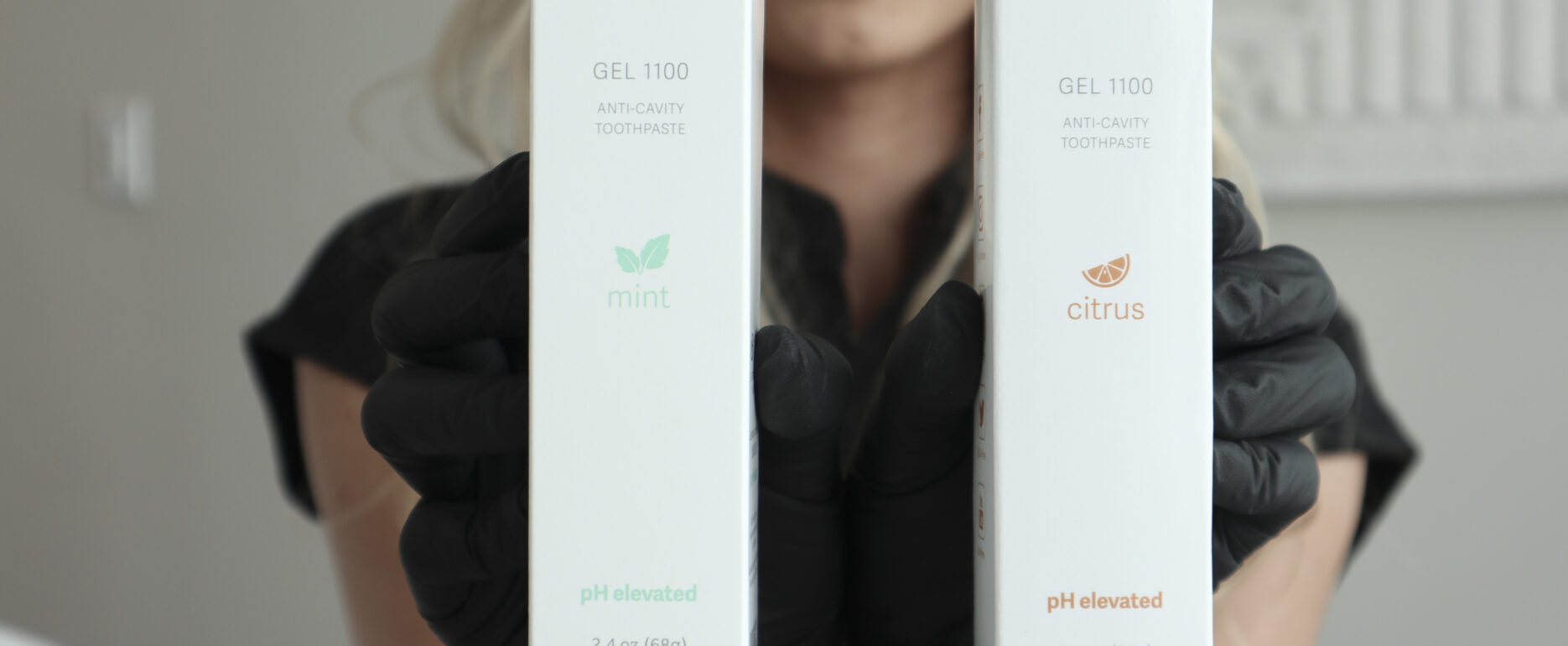
Toothpaste Recommendations
Toothpaste choice is based on your caries risk, or the chance of developing cavities. Low, medium, and high risk patients benefit from different formulas. Your dentist should tell you which level you are.
Caries risk, how we use it
We place patients into low, medium, or high risk by looking at diet, saliva, pH, plaque levels, history of decay, exposed roots, reflux, dry mouth, and restorations. The goal is to manage acids and support remineralization, not only scrub stains.
- Low risk Patients with low cavity risk typically have healthy saliva flow, good home care habits, and little to no history of decay. Goal: Maintain a stable, healthy oral environment and prevent future demineralization. Recommended approach: Brush twice daily with a standard fluoride toothpaste Use toothpaste containing approximately 1000 to 1450 ppm fluoride Focus on consistent technique rather than specialty products For most low-risk patients, a quality fluoride toothpaste used regularly is sufficient to maintain oral health.
- Medium risk Moderate risk may include patients with a history of cavities, orthodontic treatment, dietary risk factors, or inconsistent oral hygiene. Goal: Increase remineralization and improve resistance to acid challenges. Recommended approach: Use toothpaste with enhanced fluoride or remineralizing properties Incorporate remineralization support when indicated Emphasize nighttime brushing without rinsing afterward Additional preventive strategies may include fluoride rinses or targeted hygiene recommendations based on clinical findings.
- High risk High cavity risk includes patients with active decay, reduced saliva flow, frequent new restorations, or significant risk factors affecting oral health. Goal: Actively prevent disease progression and support enamel repair. Recommended approach: Prescription-strength fluoride toothpaste (typically 5000 ppm fluoride) Brush nightly and spit without rinsing to maximize fluoride contact Use adjunctive remineralization products when recommended Address contributing factors such as diet, saliva quality, and biofilm management High-risk patients often benefit from a comprehensive preventive plan tailored to their specific needs
What to look for in a toothpaste
The ideal toothpaste should have these five things.
✓ pH neutralization
Acidity breaks down tooth structure. Many pastes use acidic preservatives. Below pH 5.5 enamel is vulnerable. Choose an alkaline paste to buffer acids.
✓ Fluoride
Prevents tooth decay by supporting remineralization. Use prescription strength when risk is high and your dentist advises it.
✓ Nano hydroxyapatite
Enamel building block. Rod shaped particles are preferred. Not all nano hydroxyapatite in the U.S. uses this shape.
✓ Xylitol
Reduces growth and acid production of cavity causing bacteria.
✓ RDA value
Abrasive pastes can cause sensitivity and recession and can damage restorations. The RDA scale shows abrasivity. Aim for low to medium RDA.
Nano hydroxyapatite, what to know
Nano hydroxyapatite is a newer ingredient in U.S. toothpastes. It is a bioactive form of the same mineral found in enamel. Particle size and shape matter. Rod shaped particles are preferred because they mimic enamel crystals and stay on the surface where they are useful. Not all nano hydroxyapatite sold in the U.S. uses this shape.
How CariFree uses nano hydroxyapatite
- Included in gels designed to support remineralization alongside fluoride options.
- Formulations target an alkaline pH, which helps buffer acids and protect enamel.
- Products include xylitol to reduce acid production from cavity causing bacteria.
Ask your dentist which CariFree version fits your risk level, standard gel, 5000 for high risk, or non fluoride gel by preference.
Whitening toothpastes
Most whitening toothpastes rely on more scrubbing to remove stains. That usually means higher abrasivity. Over time this can wear enamel and roots and roughen composite, veneers, and implant restorations. If you want whiter teeth, whiten with bleach under dental guidance. Keep daily toothpaste low to medium RDA.
What about hydroxyapatite
Hydroxyapatite is the same mineral found in your enamel and dentin. When used in toothpaste, it helps rebuild weakened areas, reduce sensitivity, and smooth the surface of your teeth.
Not all hydroxyapatite is the same. The most effective type is nano-hydroxyapatite, which uses very small particles that can reach and fill microscopic defects in enamel. These particles bond to the tooth surface and help restore strength and shine. Rod-shaped particles are preferred because they mimic the natural structure of enamel and integrate more effectively. Larger or spherical particles are less effective because they sit on top of the surface rather than rebuilding it. When choosing a toothpaste, look for one that contains true nano, rod-shaped hydroxyapatite in a low-abrasive, alkaline formula, ideally paired with fluoride or xylitol for added protection.- Use daily in a low RDA paste, especially if you have sensitivity or early enamel changes.
- Look for alkaline pH and xylitol to support a less acidic environment.
- Ask us whether standard gel, prescription‑level fluoride gel, or a non‑fluoride version best matches your risk.
Charcoal toothpastes
Charcoal does not bleach teeth. It is abrasive, can embed at margins, and can interfere with fluoride. Skip charcoal. Use a low to medium RDA paste and routine cleanings. If you want shade change, whiten with bleach.
Toothpaste FAQs
Does all high-fluoride toothpaste have to be pasty?⌄
No. Some prescription options feel thick, but not all leave a chalky after-feel. CariFree Gel 5000 is a true gel. It stays smooth, has an alkaline profile, and does not feel pasty after you brush.
Brushing tips⌄
- Brush gently for two minutes. Spit, do not rinse, so the actives keep working.
- Wash your face after you brush to reduce the chance of contact dermatitis from residue on the skin.
- Use a soft brush and a low to medium RDA toothpaste to protect enamel and roots.
What about SLS?⌄
SLS (sodium lauryl sulfate) is a foaming agent. Some people find it irritating or notice more mouth ulcers with it. If you are sensitive, choose an SLS-free toothpaste. Many gentle and sensitive formulas skip SLS.
Sensitivity help⌄
Sensitivity can come from exposed roots, enamel wear, or recent whitening. The ingredients we recommend—fluoride, nano-hydroxyapatite, xylitol, low abrasivity—can reduce sensitivity as effectively as traditional agents like potassium nitrate or stannous fluoride, because they protect and rebuild the surface rather than only dulling the nerve response.
| RDA | Product | Category |
|---|