Temporary Veneers — aka Prototypes, Temps, or Provisionals
Before your final veneers are ever made, you'll wear a set of temporary veneers — also called veneer prototypes, temps, or provisionals.
What Are Temporary Veneers Used For?
Temporary veneers are plastic versions of your final veneers that serve as a test run. They let you trial the shape, color, texture, size, bite, chewing, and speech before your permanent veneers are fabricated — typically worn for about a month.
During that month, we can make changes — adjusting shape, length, or texture based on how they look and feel in your everyday life, not just in the chair. This phase is also how we communicate with our ceramist. The temporaries become the blueprint: once we've dialed in exactly what works for your bite, your speech, and your face, that information is what guides the fabrication of your final veneers.
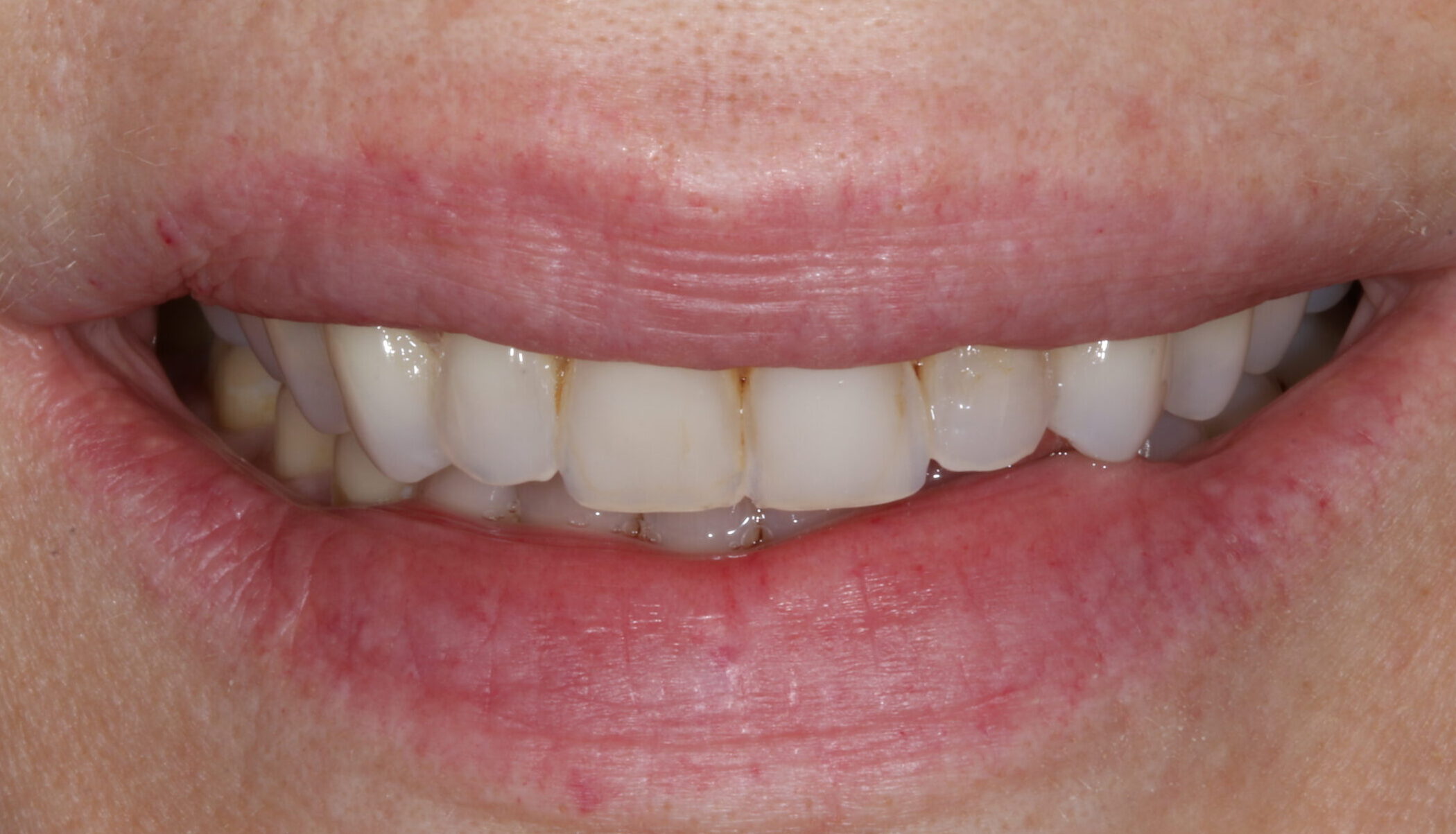
Initial presentation, before any temporary veneers were placed
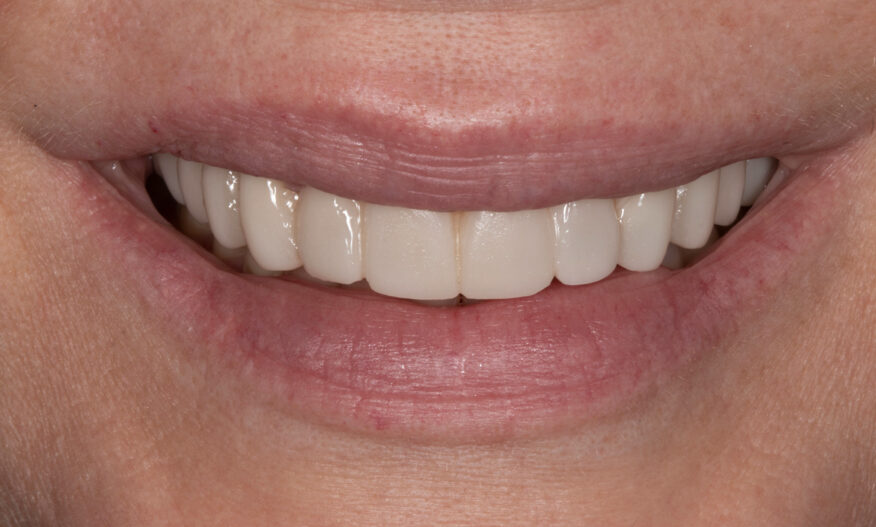
Temporary veneers on the top teeth, in shade B1
A Trial Run, So the Final Result Is Never a Surprise
In the case below, you can see the full journey from the original teeth, to the temporary veneers, to the final result. The temporaries establish the overall design — the size, shape, and length of the new smile — so both you and Dr. Driscoll know exactly what you're working toward before anything is permanent.
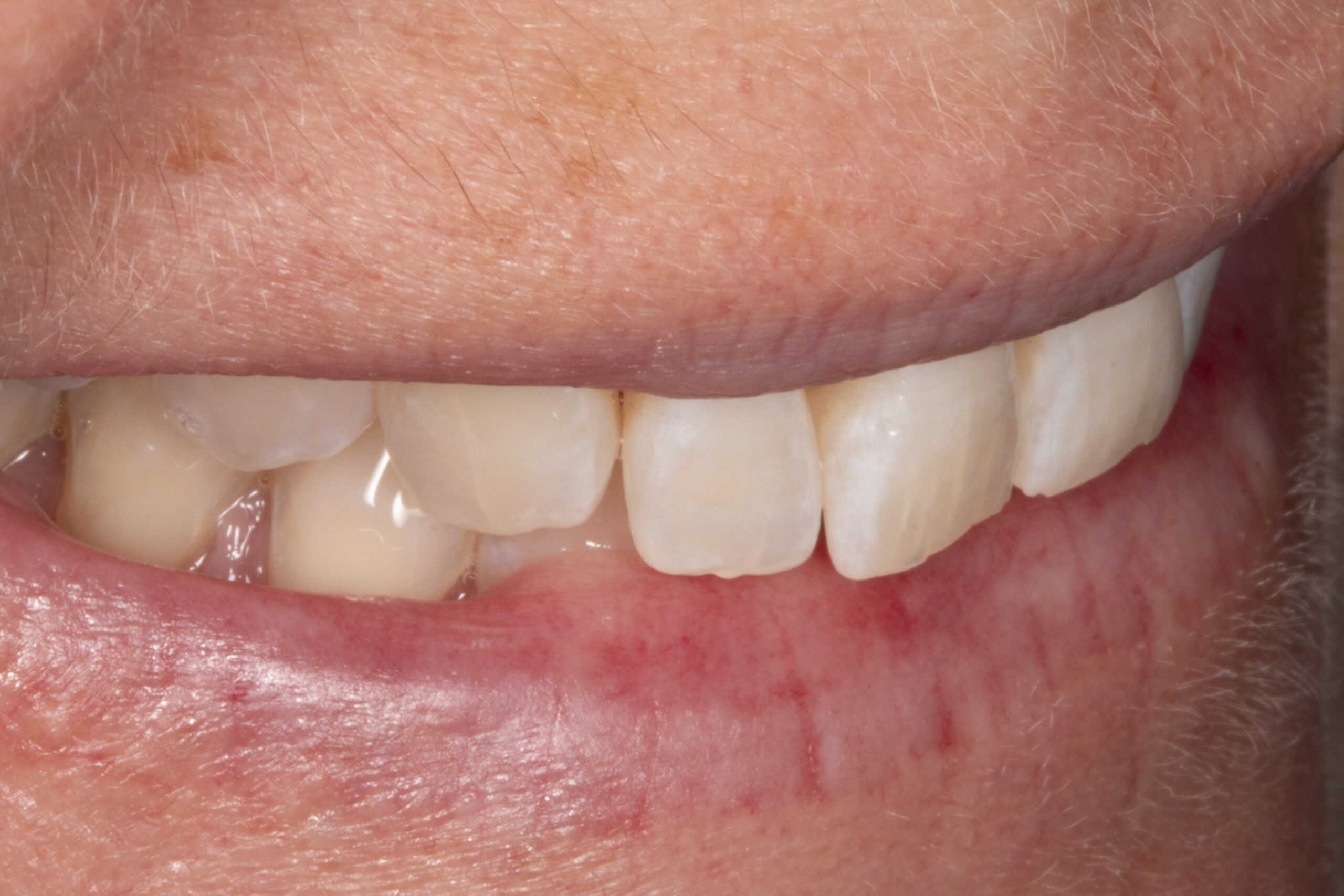
Pre-operative teeth, before treatment
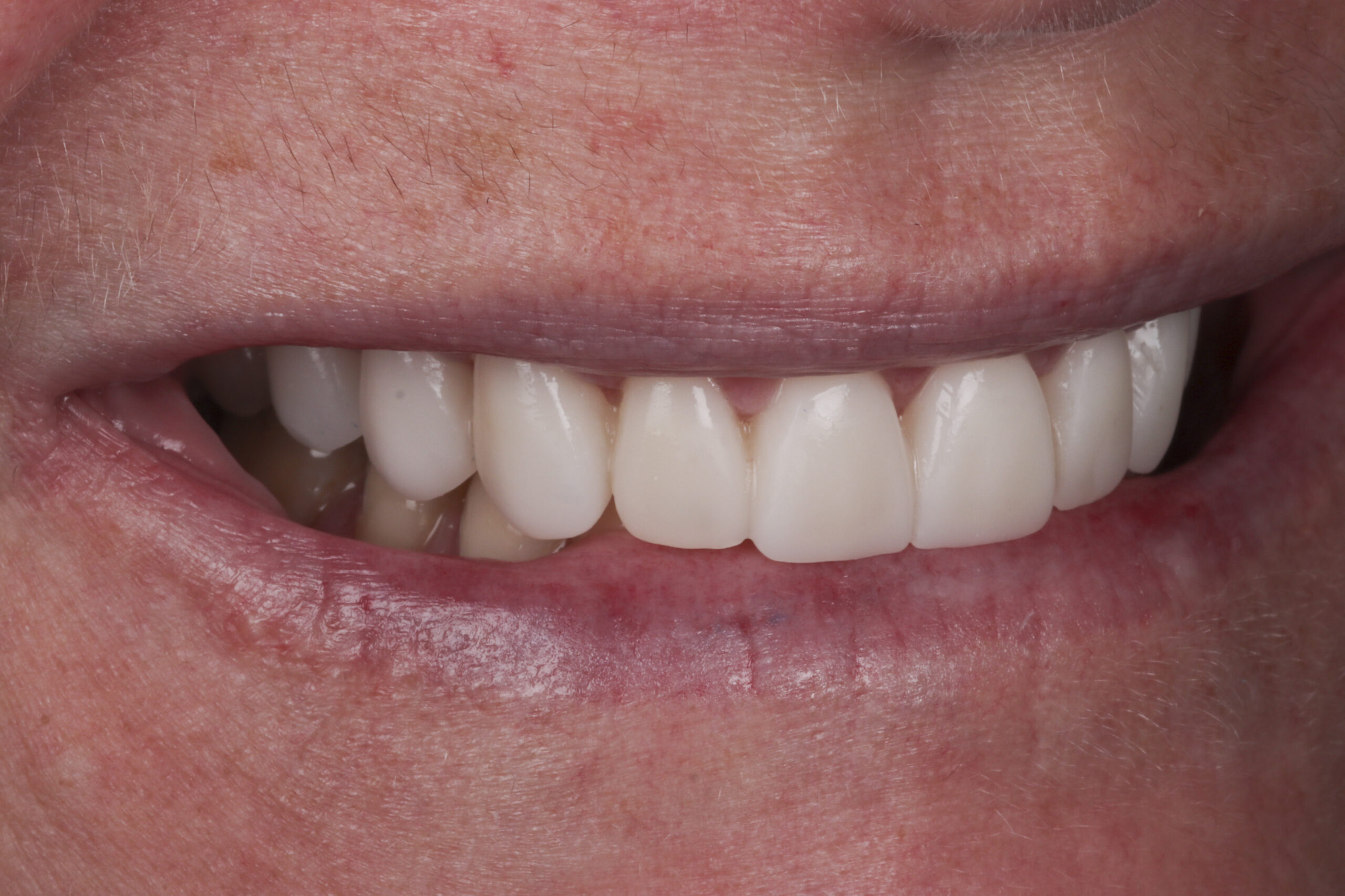
Temporary veneers, establishing the overall design
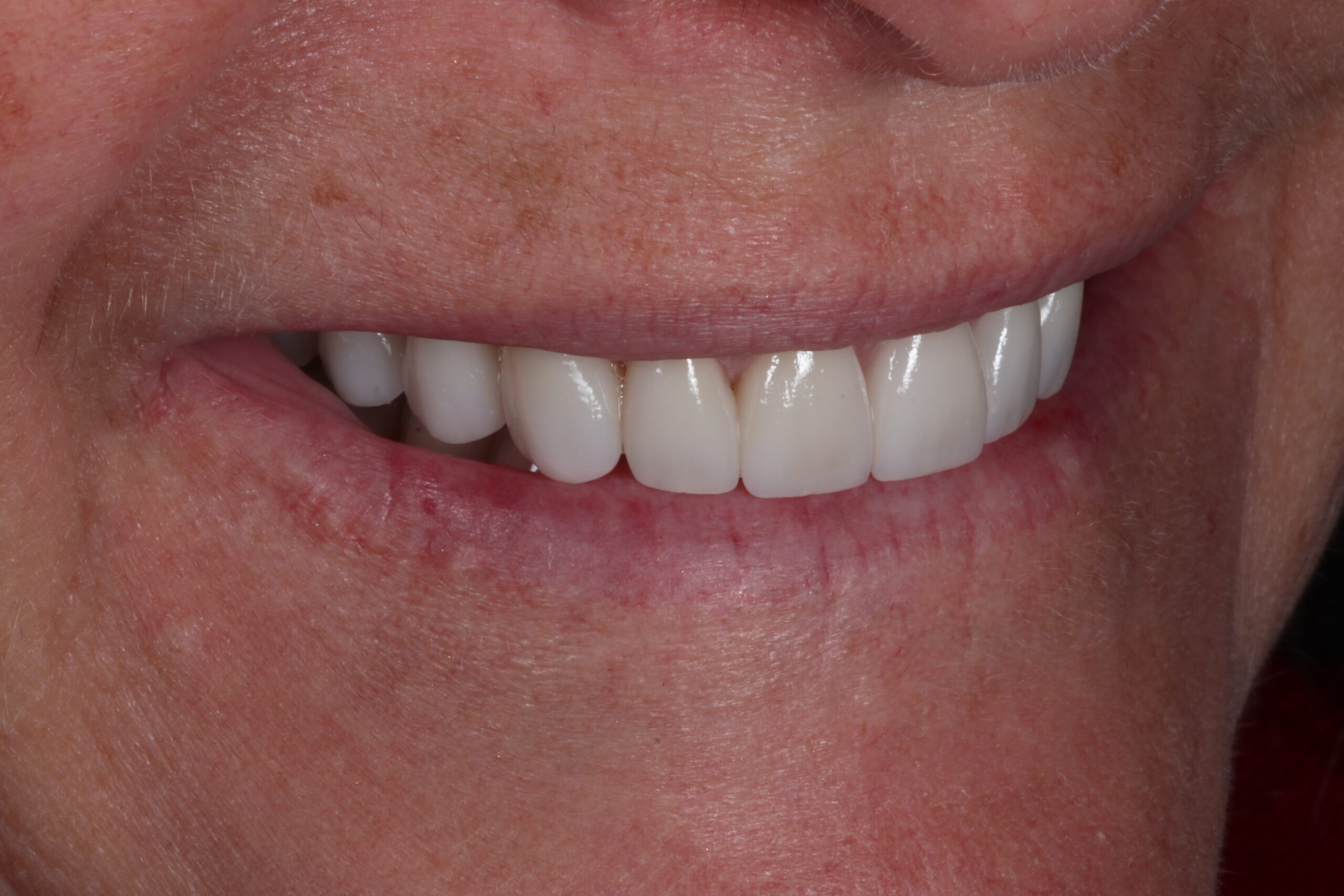
Final porcelain veneers
Notice the difference between the temporaries and the final veneers. While the temps carry the same overall design, the final porcelain reflects light in a way that mimics real, natural teeth much more closely. Porcelain has a depth and translucency that plastic simply can't replicate — it's the last step that takes the design from looking good to looking genuinely like your own teeth.
Caring for Your Temporary Veneers
Temporary veneers need a bit of extra care compared to your natural teeth or your future final veneers. A few guidelines to follow during the month you're wearing them:
- Avoid flossing between the temporary veneers unless specifically instructed — flossing can dislodge them, since they are not bonded as permanently as your final veneers will be.
- Use a soft-bristled toothbrush and brush gently to keep the temporaries clean without putting excess pressure on them.
- Avoid biting directly into hard foods (like apples or corn on the cob) or sticky foods (like caramel or taffy), which can pull the temporaries loose.
- If a temporary veneer feels loose or comes off, call our office right away so we can reseat it.
Once your final veneers are placed, you can return to your normal oral hygiene routine, including flossing, an electric toothbrush, and a water flosser, since the final porcelain veneers are permanently bonded and far more durable than the temporaries.
Frequently Asked Questions
What are temporary veneers used for?
Temporary veneers are plastic versions of your final veneers that serve as a test run. They let you trial the shape, color, texture, size, bite, chewing, and speech before your permanent veneers are fabricated — typically worn for about a month.
How long do I wear temporary veneers?
Most patients wear temporary veneers for about a month. This gives enough time to test everyday function — eating, speaking, and smiling — before the final veneers are fabricated.
Can temporary veneers be adjusted?
Yes. During the month you wear them, we can adjust shape, length, or texture based on how they look and feel in real life, not just in the chair.
Do temporary veneers look real?
Yes and no. Temporary veneers are designed to closely match the shape, size, and shade of your planned final veneers, so they give an accurate preview of your new smile. However, they are made of a plastic-like material and don't reflect light the same way porcelain does, so the final veneers will look even more natural and lifelike once placed.
Can I floss temporary veneers?
We generally recommend avoiding flossing between temporary veneers, since flossing can dislodge them. A soft-bristled toothbrush is the best way to keep them clean during this phase. Once your final veneers are placed, you can return to flossing, along with using an electric toothbrush and a water flosser as part of your normal routine.
What shade options are available for veneers?
There is a wide range of shades to choose from, from natural, tooth-like tones to brighter, more uniform shades depending on the look you're going for. We'll help you choose the right shade for your goals during your design appointment, and your temporary veneers will reflect that chosen shade so you can preview it in real life.
What is the glaze on veneers, and what does it do?
A glaze is a smooth, glossy finish applied to your temporary veneers to make them look more polished and lifelike while you're wearing them. It improves how the temporaries look and feel, though it doesn't change the fact that, like natural teeth, temporary veneers can still pick up some staining over the month you wear them.
Do temporary veneers stain?
Yes, temporary veneers can stain, even with a glaze applied. Since you'll only be wearing them for about a month before your final veneers are placed, this is normal and expected — the final porcelain veneers are far more stain-resistant for long-term wear.
What do temporary veneers feel like?
Temporary veneers are made of a lightweight plastic-like material called bisacryl. Most patients adjust quickly and are able to eat, speak, and go about daily life comfortably while wearing them.
Why can't I just go straight to the final veneers?
Temporary veneers let you and your dentist confirm the design actually works in real life — how it feels when you bite, chew, and speak — before the final, permanent porcelain is fabricated. They also give our ceramist the exact blueprint needed to create your final result, so the final veneers are never a surprise.