Porcelain Veneers
Your smile should look like you. Whether you want to correct a few imperfections, restore worn teeth, or create a brighter, fuller smile, porcelain veneers can be designed around your features and goals.
At Charleston Dental Studio, Dr. Julie Driscoll combines advanced esthetic training, comprehensive diagnosis, and careful planning to create personalized results.
Book a Veneer Consultation →What Are Porcelain Veneers?
Porcelain veneers are thin, custom-made ceramic restorations that are bonded to the front surfaces of teeth.
They can change the color, shape, size, and proportions of teeth while preserving as much healthy tooth structure as the clinical situation allows.
Veneers may be used to address chipped teeth, worn edges, persistent discoloration, gaps, uneven tooth shapes, and certain esthetic concerns related to tooth position.
They are not a substitute for treating active decay, gum disease, or significant bite problems. We evaluate those factors before recommending cosmetic treatment.
What Can Veneers Improve?
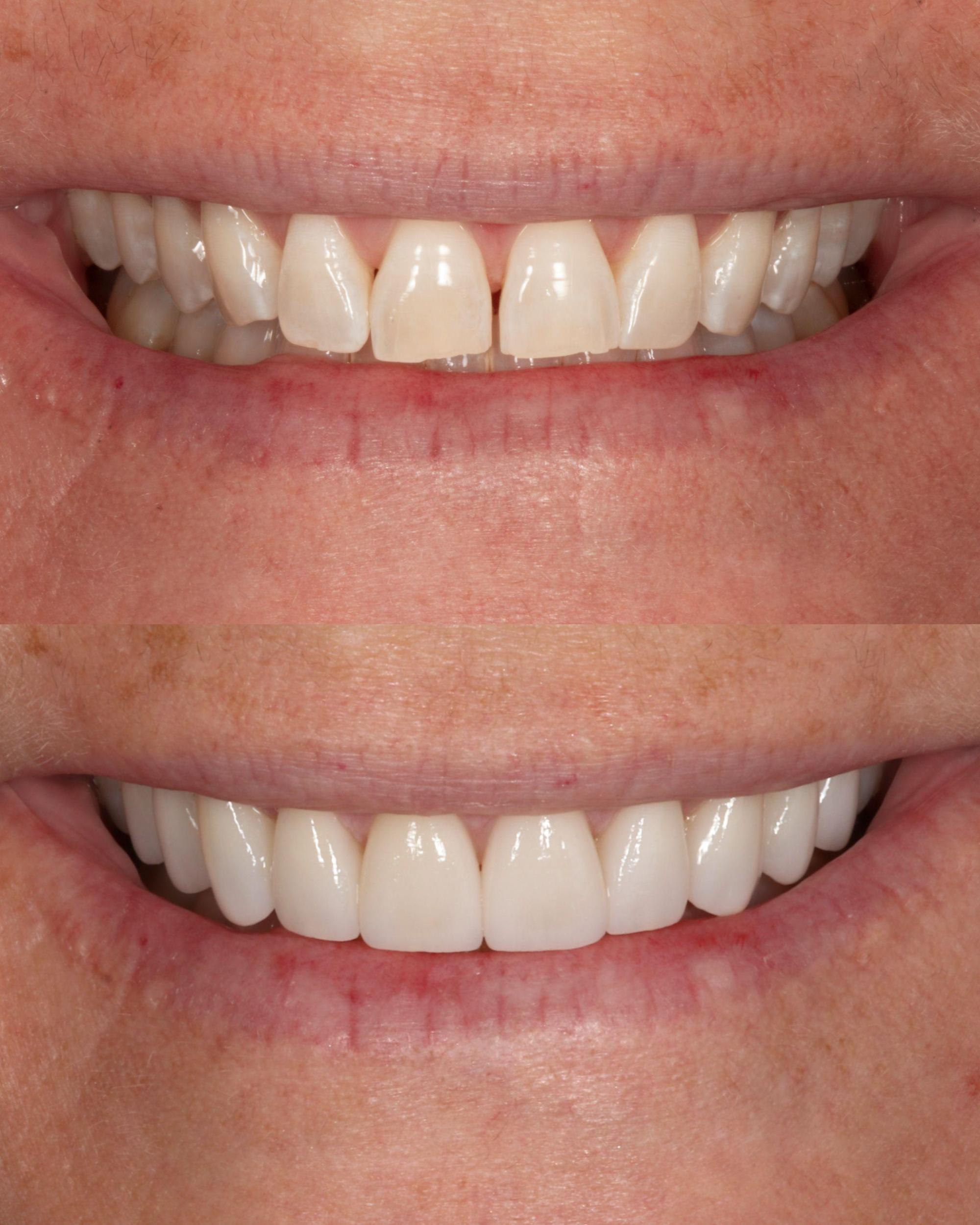
Veneers can address several esthetic concerns, sometimes within the same treatment plan.
Color & Discoloration
Improve the appearance of teeth with deep staining, uneven color, or discoloration that whitening alone cannot adequately address.
Shape & Proportion
Refine short, narrow, uneven, or differently shaped teeth. Restore worn edges and improve the proportions of your smile.
Smile Width & Balance
In appropriate cases, veneers can improve the appearance of small spaces and create a broader-looking smile with better balance.
What Makes Veneers Look Natural?
Natural teeth aren't perfectly flat, opaque, or identical. They have translucency, subtle color variations, surface texture, and individual character.
Dr. Driscoll works closely with a master ceramist to design porcelain veneers that reflect these qualities.
- Tooth shape and proportions suited to your face
- Shade selection based on your preferences
- Translucency and depth that resemble natural enamel
- Surface texture and carefully designed incisal edges
- Consideration of gum contours and smile line
- A comfortable bite and appropriate function
Porcelain materials, including feldspathic porcelain in selected cases, allow our ceramist to create detailed optical characteristics that resemble enamel.
Beautiful Doesn't Have to Mean Obvious.
Some patients want a subtle improvement that friends and family can't quite put their finger on.
Others want a brighter, bolder transformation.
We design your smile around what you want, rather than using the same shape and shade for everyone.
Explore Our Smile Gallery →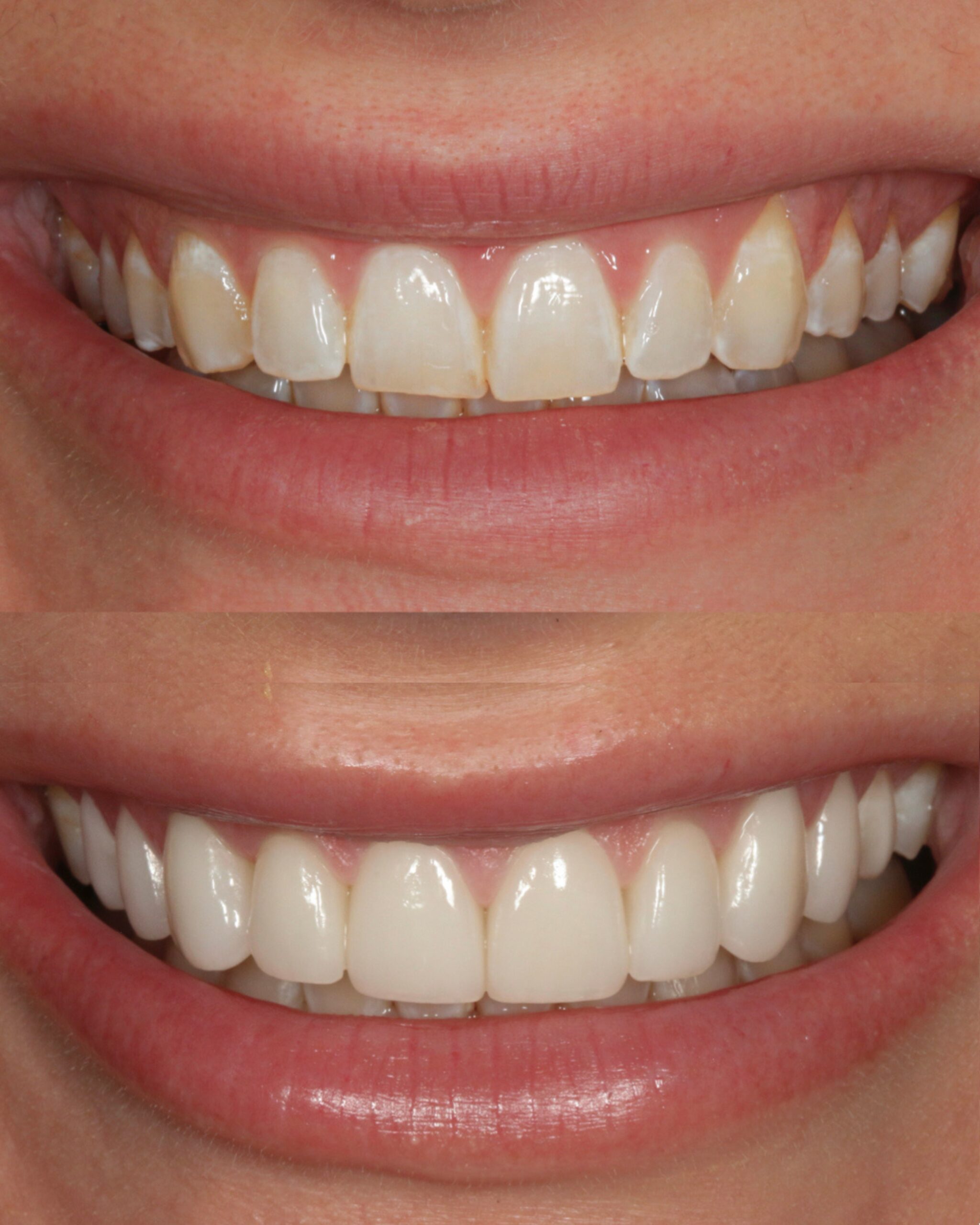
Minimal-Prep Porcelain Veneers
One of the most common questions we hear is whether teeth need to be shaved down for veneers.
The amount of preparation depends on your existing tooth position, enamel, old restorations, and the changes we are trying to achieve.
By designing the final result before preparing the teeth, we can plan where porcelain needs space and where natural enamel can be preserved.
Some cases require very little preparation. Others require more. Minimal-prep veneers are not appropriate for every patient, and porcelain veneers are generally considered irreversible.
Will My Teeth Be Shaved Down? →Porcelain vs. Composite Veneers
Both materials can improve the appearance of teeth, but they differ in esthetics, longevity, maintenance, and cost.
Porcelain Veneers
Custom-made ceramic restorations designed in collaboration with a dental laboratory and bonded to the teeth.
- Excellent resistance to staining
- Lifelike translucency, depth, and surface texture
- Generally greater longevity than composite
- Excellent long-term color stability
- Typically higher initial investment
For patients seeking highly natural-looking, durable, and color-stable results, porcelain is generally our preferred material when clinically appropriate.
Composite Resin Veneers
Composite veneers are a more affordable alternative made from tooth-colored resin, often applied directly to the teeth in one appointment.
- Lower initial cost than porcelain
- Can be appropriate for smaller, conservative changes
- Can often be repaired or modified
- More susceptible to staining and discoloration
- Greater potential for chipping and wear over time
- May need more frequent polishing, maintenance, or repairs
Composite can produce beautiful results, but it may be more difficult to achieve the same depth, translucency, and lifelike characteristics possible with custom-layered porcelain.
Explore Composite Bonding →Our Porcelain Veneer Process
We spend significant time planning and testing your new smile before the final porcelain is bonded.
Consultation & Design
We discuss your goals, evaluate your teeth and bite, and collect photographs, measurements, and digital scans.
These records guide the smile design and help us determine the appropriate treatment.
Preparation & Prototypes
Teeth are prepared as needed, existing restorations or decay are addressed, and digital records are taken.
Temporary veneer prototypes allow you to preview the planned shape, length, and overall design.
Living With Your Trial Smile
You'll wear your temporary veneers while we evaluate their appearance, comfort, speech, chewing, and bite.
Adjustments made during this phase help guide our master ceramist in fabricating the final porcelain.
Final Veneers & Follow-Up
Your final veneers are tried in and evaluated for fit, appearance, and function before bonding.
Follow-up visits allow us to refine your bite, assess your gums, and deliver protective appliances when indicated.
Why We Use Temporary Veneers
Temporary veneers, also called prototypes or provisionals, are an important part of our smile design process.
They allow you to experience your proposed smile in everyday life before your permanent porcelain is fabricated.
During this phase, we can evaluate and adjust tooth length, contours, speech, chewing, and bite.
Your prototypes become a blueprint for the final restorations. The goal is to make the final result predictable, not a surprise.
Learn About Temporary Veneers →See It. Wear It. Refine It.
We want you to feel comfortable with the design before it becomes permanent.
Temporary veneers give you time to see your smile in photographs, while speaking, and during daily activities.
They also provide an opportunity to communicate specific changes before the final porcelain is completed.
A Brighter, Broader, Camera-Ready Smile
Not everyone wants a barely noticeable change.
Some patients want a brighter, fuller smile with more teeth showing and a more dramatic transformation.
In this case, twelve porcelain veneers were used to create a brighter, broader smile with consistent tooth color and improved proportions.
The goal isn't to make every patient look the same. It's to understand the smile you want and design the treatment accordingly.
Explore This Smile Transformation →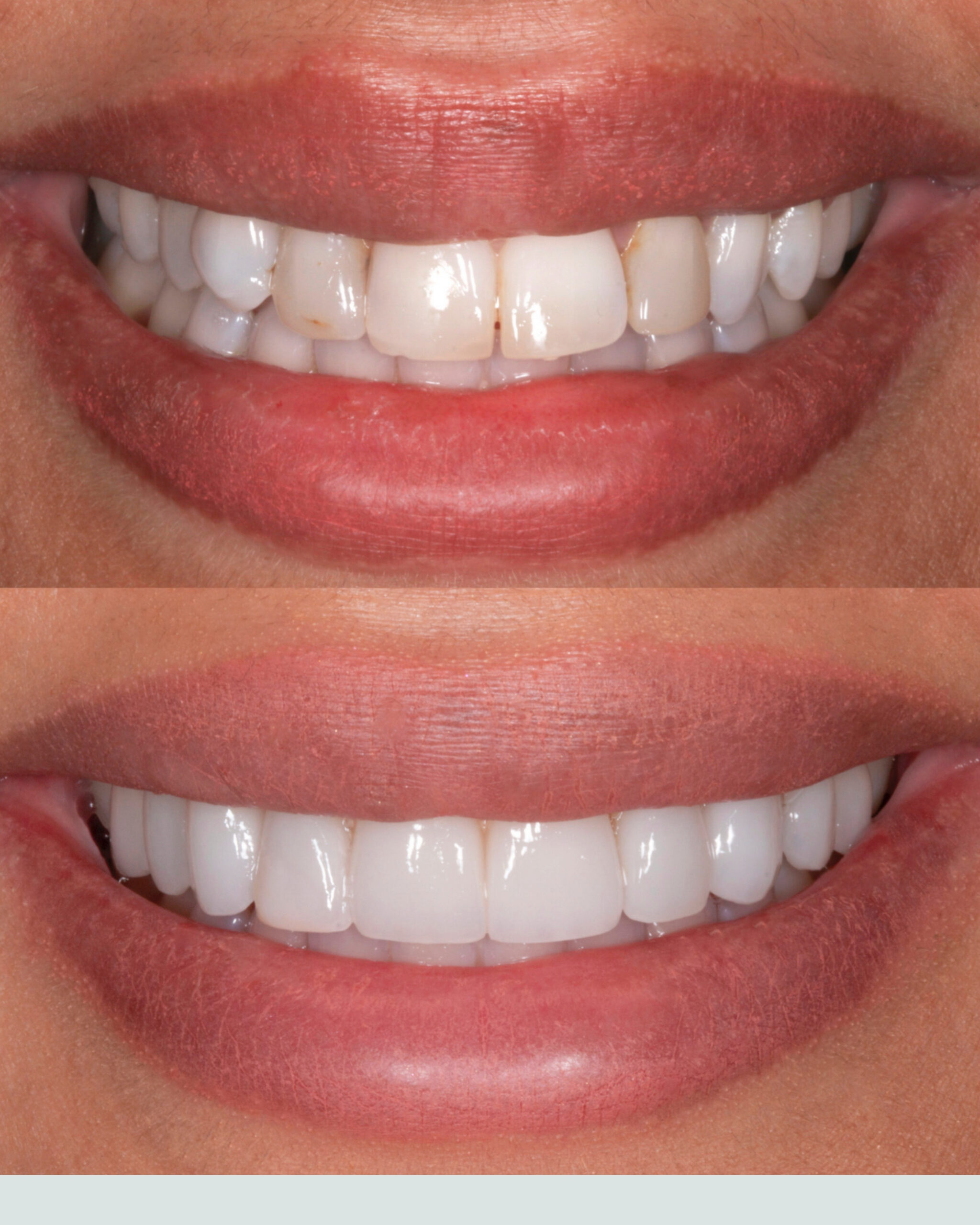
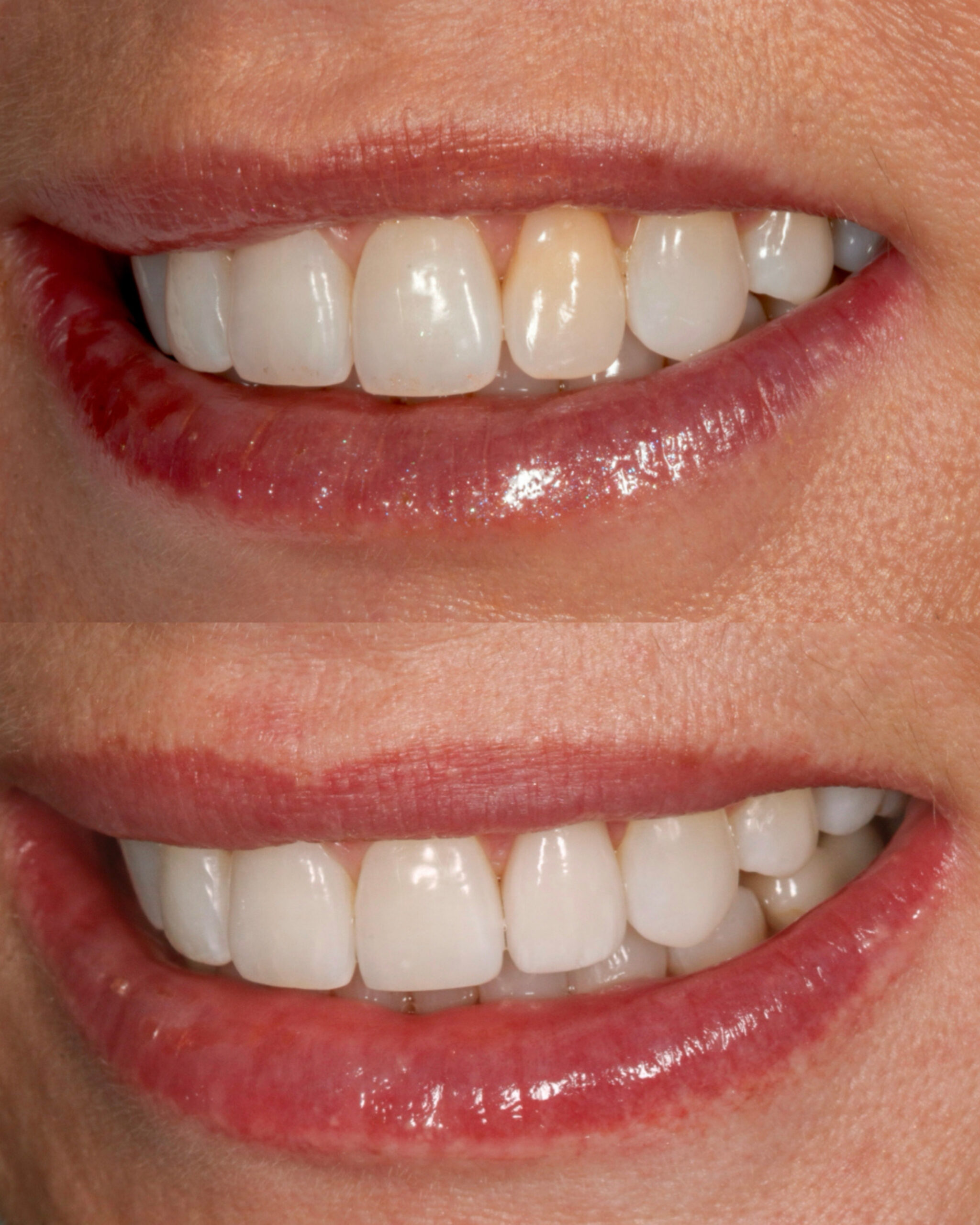
You Don't Always Need a Full Set of Veneers.
This is one of our favorite examples of individualized cosmetic dentistry.
This patient had previously been told she needed ten veneers to improve her smile.
Instead, her treatment plan combined Invisalign, Botox, and one carefully matched porcelain veneer.
Matching a single veneer to surrounding natural teeth requires careful attention to shade, translucency, texture, and shape.
Beautiful results aren't always about treating more teeth. Sometimes they're about treating exactly what's needed.
See the Single-Veneer Case →How Much Do Porcelain Veneers Cost?
At Charleston Dental Studio, porcelain veneers cost around $3,000 per tooth. The total investment depends on the number of teeth being treated, the complexity of your case, and your individual treatment goals.
Some patients benefit from just one or two veneers, while others choose a more comprehensive smile transformation. We don't believe in a one-size-fits-all approach, and we'll help determine which teeth actually need treatment.
Composite resin veneers are a more affordable alternative and can be an excellent option for certain patients, particularly those looking to make smaller or more conservative changes.
However, composite has some trade-offs. Compared with porcelain, it is more prone to staining, discoloration, chipping, and wear over time. It may also be more difficult to achieve the same depth, translucency, and lifelike characteristics possible with custom-layered porcelain. Composite veneers often require more frequent polishing, maintenance, or repairs.
For patients seeking the most natural-looking, durable, and color-stable esthetic result, porcelain veneers are generally our preferred option when clinically appropriate.
During your consultation, we'll review both options, including their benefits, limitations, costs, and long-term maintenance, so you can make an informed decision.
How Long Do Porcelain Veneers Last?
Porcelain veneers often last 10 to 15 years or longer, although longevity depends on the bite, oral habits, supporting tooth structure, and maintenance.
Porcelain is resistant to staining, but veneers are not indestructible. They can chip, fracture, or require replacement.
We recommend regular preventive visits, excellent home care, and a protective nightguard when indicated.
Explore the Veneer Experience
Learn more about what happens before, during, and after porcelain veneer treatment.
Our Veneer Process
A detailed look at the appointments, smile design, prototypes, and final porcelain delivery.
Read the Process →Temporary Veneers
Learn why we use prototypes, what they feel like, and how they help guide the final smile design.
Explore Prototypes →Will My Teeth Be Shaved Down?
Understand minimal-prep dentistry, enamel preservation, and how we plan veneer preparation.
Read the Article →Porcelain Veneers FAQs
Do porcelain veneers look natural?
Yes. Porcelain veneers can closely resemble natural enamel when their shape, shade, translucency, texture, and proportions are carefully designed. We customize the appearance to your preferences, whether you want subtle improvements or a brighter smile.
Will my teeth be shaved down for veneers?
Most porcelain veneer cases require some enamel preparation, but the amount varies. Our goal is to preserve healthy tooth structure while creating sufficient space for the final restorations. Minimal-prep treatment is possible in selected cases.
Learn About Veneer Preparation →Are porcelain veneers permanent or reversible?
Porcelain veneers are generally considered irreversible because enamel is often removed during preparation. The veneers themselves may eventually need repair or replacement. We discuss the long-term implications before starting treatment.
How long does the veneer process take?
Treatment commonly spans several appointments over approximately eight to ten weeks, depending on the case. Our process includes planning, preparation, temporary prototypes, final porcelain delivery, and follow-up.
See Our Detailed Veneer Timeline →How many veneers do I need?
There is no standard number. Some patients need only one veneer, while others benefit from four, eight, ten, or more. We consider which teeth show when you smile, your existing restorations, and your treatment goals.
How much do veneers cost in Charleston, SC?
At Charleston Dental Studio, porcelain veneers cost around $3,000 per tooth. The total cost depends on how many teeth are treated and the complexity of your case. Composite resin veneers are a more affordable alternative, although they generally require more maintenance and may not offer the same long-term esthetic characteristics as porcelain.
How long do porcelain veneers last?
Many porcelain veneers last 10 to 15 years or longer, but results vary with oral hygiene, bite forces, grinding, habits, and regular dental care.
Can I eat and drink normally with veneers?
Once your final veneers are bonded and your dentist has cleared you, most patients return to normal eating. Avoid using your teeth as tools, chewing ice, or biting excessively hard objects that may damage the restorations.
Do porcelain veneers stain?
Dental porcelain is more stain-resistant than natural enamel and composite resin. However, staining can develop around restoration margins, and the natural teeth around veneers can still change color. Regular cleaning remains important.
What is the difference between porcelain and composite veneers?
Porcelain veneers are custom-made ceramic restorations that generally provide excellent stain resistance, lifelike translucency, and long-term color stability. Composite veneers are a lower-cost resin alternative that can be appropriate for smaller changes but are more prone to staining, chipping, and wear and may need more frequent maintenance.
What makes Charleston Dental Studio's veneer process different?
Dr. Julie Driscoll combines advanced esthetic training, Kois-based comprehensive diagnosis, digital planning, collaboration with a master ceramist, and a temporary prototype phase. We evaluate both the appearance and function of your smile before finalizing treatment.
Your Smile, Designed Around You.
Whether you're considering one porcelain veneer or a complete smile transformation, we'll help you understand your options and create a treatment plan based on your goals, oral health, and bite.
Schedule a Veneer Consultation →