Dental Bridges
Replacing a missing tooth is about more than filling a space. A well-designed dental bridge restores function while blending with the surrounding teeth in shape, color, and proportion.
Book a Consultation →
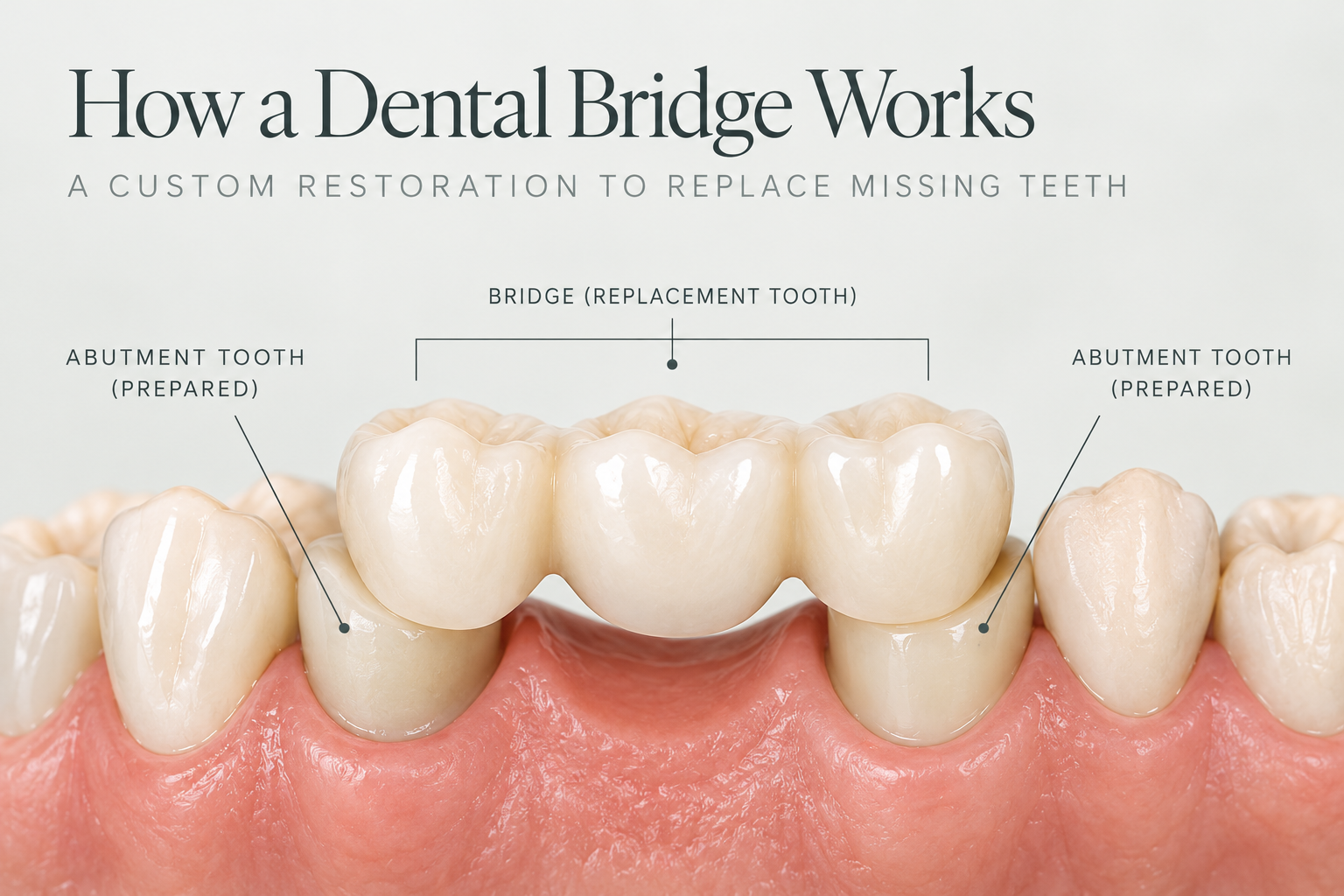
What Is a Dental Bridge?
A dental bridge is a fixed restoration used to replace one or more missing teeth. Traditional bridges use neighboring teeth for support, while implant-supported bridges are anchored to dental implants.
The replacement teeth are designed to fit your bite and complement your existing smile. Unlike a removable partial denture, a fixed bridge stays in place.
When Is a Bridge a Good Option?
A bridge may be recommended when a tooth is missing or when an existing bridge needs to be replaced. We consider the health of the supporting teeth, your bite, esthetic goals, and long-term prognosis before recommending treatment.
- One or more missing teeth
- An older bridge that is failing or no longer fits properly
- Existing restorations that no longer match your smile
- A fixed alternative to a removable partial denture
- Situations where a bridge may be more appropriate than an implant
Bridges vs. Dental Implants
A dental bridge and a dental implant can both replace missing teeth, but they work differently.
A traditional bridge is supported by neighboring teeth, while a dental implant is placed in the jawbone and supports a restoration independently.
If the neighboring teeth already need crowns, a bridge may be a reasonable option. If they are healthy and unrestored, an implant may offer advantages.
We'll review the options with you and explain which approach makes the most sense for your specific situation.
Our Approach
We approach dental bridges as both a restorative and an esthetic treatment. The bridge needs to function comfortably, but it should also look like it belongs alongside your natural teeth.
That means looking beyond the missing tooth. We evaluate your bite, the supporting teeth, gum tissue, tooth proportions, and how the restoration fits into your overall smile.
When replacing older dental work, we also consider whether adjustments to the surrounding restorations or gum contours are needed to achieve a more consistent result.
We assess the supporting teeth, bite, gum health, and available restorative options.
We discuss the benefits and limitations of a bridge compared with other options, including implants when appropriate.
We plan the shape, contours, shade, and materials based on your clinical needs and smile.
We evaluate the fit and bite, then review how to clean and maintain your restoration.
See the Transformation
Take a closer look at how replacing older dental restorations can improve the appearance of a smile.
Correcting Mismatched Dental Restorations
This patient had an older dental bridge that didn't match the surrounding teeth. Differences in color, tooth shape, and gum levels made the restorations stand out.
We replaced the existing bridge, adjusted the gum levels to improve symmetry, and added one porcelain veneer to create a better transition between the restored and natural teeth.
Rather than treating every front tooth, we focused on the specific areas that needed correction.
View Full Case →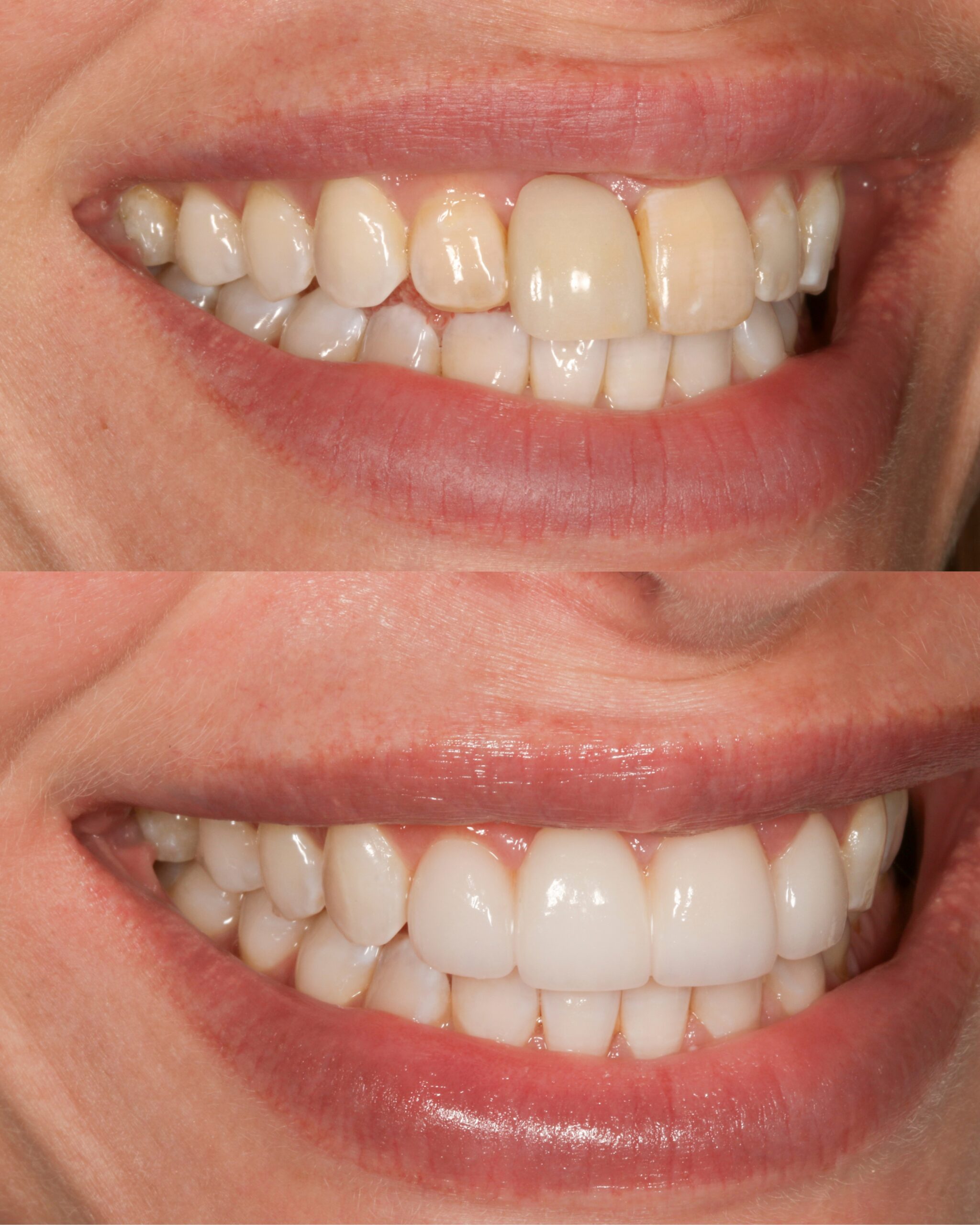
Frequently Asked Questions
How long does a dental bridge last?
Many dental bridges last 10 years or longer, although their lifespan varies based on the supporting teeth, oral hygiene, bite forces, and other factors. Regular examinations and careful cleaning are important for long-term success.
What materials are used for dental bridges?
Bridges can be made from zirconia, other dental ceramics, or porcelain fused to metal. We select the material based on the location of the bridge, the bite, esthetic requirements, and the needs of the supporting teeth.
Is a bridge better than a dental implant?
Neither option is automatically better for everyone. Dental implants replace teeth without requiring support from neighboring natural teeth, while a traditional bridge uses adjacent teeth for support. The condition of those teeth, bone availability, medical factors, and treatment preferences all influence the decision.
Can an old dental bridge be replaced?
Yes. Older bridges may need replacement because of wear, decay, changes in the supporting teeth, or esthetic concerns. We first evaluate the underlying teeth and surrounding tissues to determine whether a new bridge is appropriate.
How do I clean under a dental bridge?
Cleaning underneath the replacement tooth is essential. Depending on your bridge design, we may recommend floss threaders, specialized floss, interdental brushes, or a water flosser as an additional cleaning aid.
Will my dental bridge match my natural teeth?
Matching natural teeth is an important part of our restorative planning. We consider shade, translucency, tooth shape, and surface texture. The final result depends on the existing teeth, materials, and clinical circumstances.
Ready to Restore Your Smile?
Whether you're replacing a missing tooth or updating an older dental bridge, we'd love to help you explore your options.
Book a Consultation →