Composite Bonding
Small refinements. Beautiful results.
From chipped edges to subtle differences in tooth shape, composite bonding offers a conservative way to enhance your smile, often in just one appointment.
At Charleston Dental Studio, Dr. Julie Driscoll approaches bonding with the same attention to detail, proportion, and natural esthetics that guides our more comprehensive smile transformations.
Book a Bonding Consultation →Sometimes the Smallest Changes Make the Biggest Difference.
Composite bonding is a cosmetic dental treatment that uses tooth-colored resin to repair or refine the shape and appearance of natural teeth.
The material is bonded directly to the tooth, carefully sculpted, cured with a special light, and polished to blend with the surrounding enamel.
Bonding can improve chipped edges, small gaps, uneven tooth lengths, and minor imperfections without necessarily treating the entire smile.
The goal isn't to change every tooth. It's to identify exactly what needs improvement while preserving what already works.
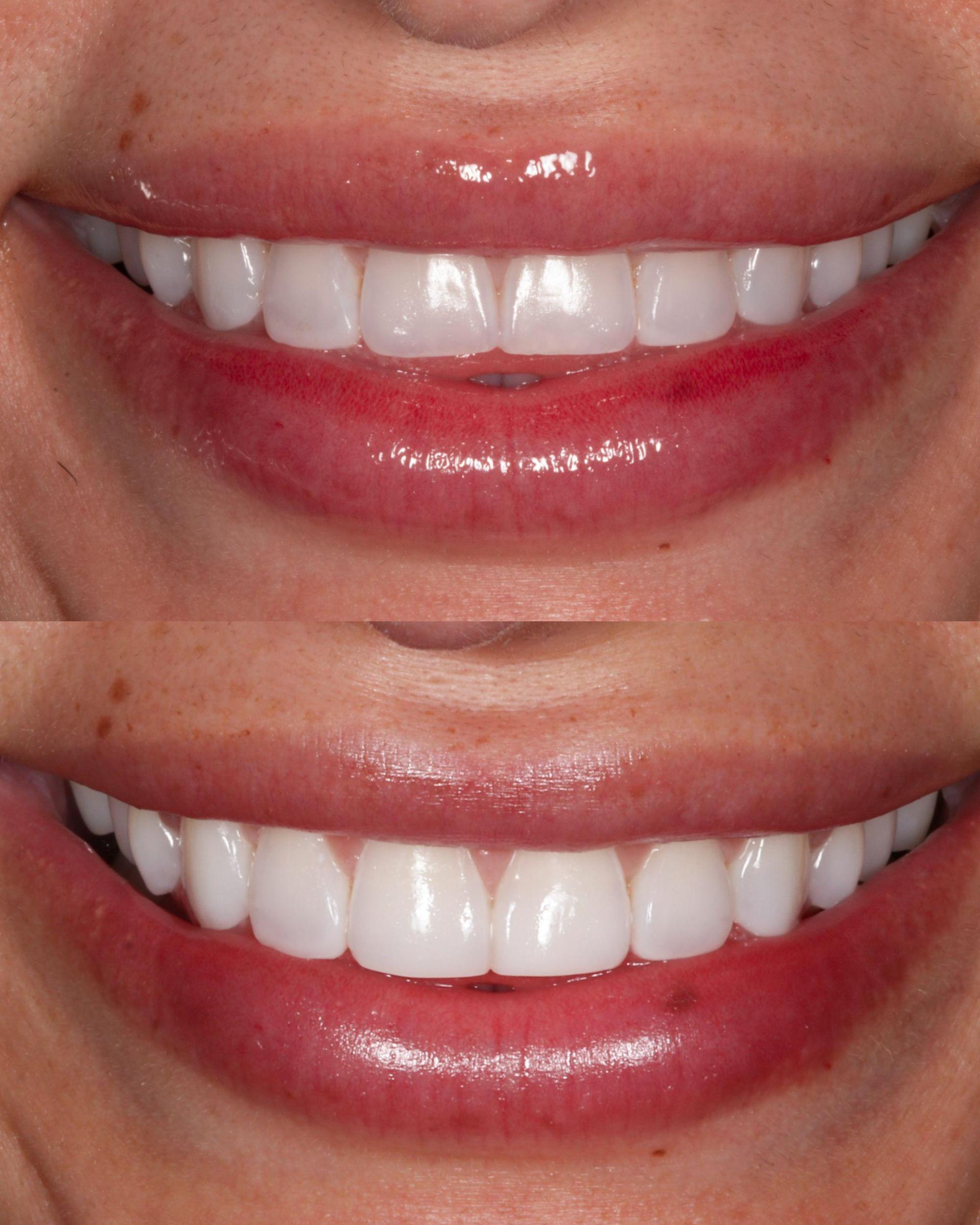
What Can Composite Bonding Improve?
Bonding is particularly well suited to smaller esthetic concerns when the teeth and bite are healthy.
Chipped or Worn Edges
Restore small areas of lost tooth structure and smooth uneven incisal edges for improved shape and symmetry.
Small Spaces
Close select gaps or improve tooth proportions when the space, tooth position, and bite make bonding appropriate.
Uneven Tooth Shapes
Refine differences in tooth length, width, contours, and symmetry while preserving natural tooth character.
Not Every Smile Needs Veneers.
If your teeth are already well positioned, you're happy with their color, and you only want to improve a few details, composite bonding may be an excellent option.
Ideal candidates often have:
- Relatively straight, well-aligned teeth
- A tooth shade they're already happy with
- Small chips, gaps, or shape discrepancies
- A stable bite without excessive forces on the bonding
- Healthy teeth and gums
Before recommending bonding, Dr. Driscoll evaluates tooth position, enamel, proportions, and how your teeth come together.
Significant misalignment, discoloration, extensive wear, or heavy bite forces may require a different approach or additional treatment first.
Enhance What's Already There.
We believe that the best cosmetic treatment isn't always the most extensive one.
In many cases, a small amount of carefully placed composite can make a meaningful difference in how balanced and harmonious your smile appears.
We also want patients to understand the limitations of bonding before choosing it. Composite requires maintenance and isn't appropriate for every tooth or every bite.
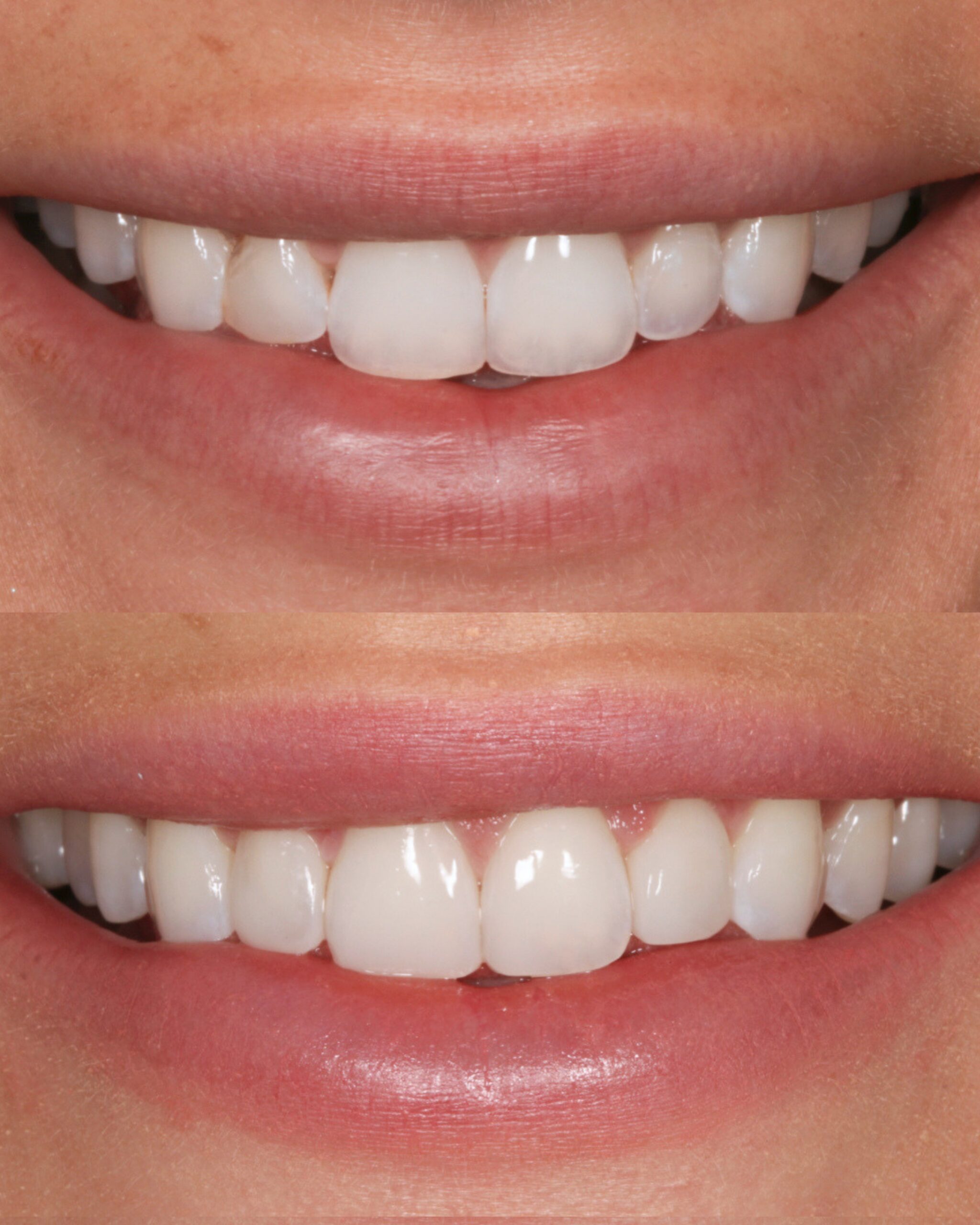
Natural Doesn't Mean Perfectly Uniform.
Some of our favorite bonding cases are the ones where the changes are subtle.
This patient wanted to improve the shape and proportions of her four front teeth while preserving their natural softness and character.
She liked the gentle curves and rounded edges of her natural teeth. Rather than creating a perfectly straight, squared-off smile, we used composite bonding to refine tooth lengths, contours, and symmetry.
The result is a more balanced smile that still looks like her own.
Explore This Patient's Results →How Does Composite Bonding Work?
Many smaller bonding procedures can be completed in one visit, often with little or no removal of healthy enamel.
Plan
We evaluate your smile, discuss your goals, and determine which teeth would benefit from bonding.
We also consider tooth color, existing restorations, gum health, and bite forces.
Sculpt
The tooth surface is prepared and conditioned for bonding. Tooth-colored composite resin is applied, shaped, and cured with a special light.
We carefully refine tooth length, contours, and overall proportions.
Polish
The restoration is finished and polished to create natural-looking texture and surface shine.
We check your bite and make adjustments to reduce unwanted contact or interference.
See Composite Bonding in Action
A closer look at real cosmetic bonding treatments and the details that go into refining a smile.
Composite Bonding vs. Porcelain Veneers
Both treatments can enhance a smile, but they have different strengths, limitations, and maintenance needs.
Composite Bonding
Composite bonding is often a conservative option for small changes to teeth that are otherwise healthy, well positioned, and already an acceptable color.
- Usually lower initial cost
- Often completed in one appointment
- May require little or no enamel removal
- Can often be repaired or modified
- More prone to staining and discoloration
- Greater susceptibility to wear and chipping
- May require periodic polishing or repairs
Porcelain Veneers
Porcelain veneers may be a better choice for patients seeking more significant changes in tooth color, shape, or overall smile design.
- Custom-made by a dental laboratory
- Excellent stain resistance
- Greater long-term color stability
- Lifelike translucency and surface detail
- Generally longer-lasting than composite
- Higher initial investment
- Typically require some tooth preparation
Neither treatment is automatically better for every patient. We consider your bite, tooth structure, esthetic goals, and willingness to maintain the restorations before recommending the most appropriate option.
How Long Does Composite Bonding Last?
Composite bonding can last several years, and some restorations last longer with appropriate care.
Longevity depends on the size and location of the bonding, how your teeth come together, grinding habits, and maintenance.
Composite is not as resistant to staining or wear as porcelain. Over time, it may discolor, chip, lose polish, or require repair or replacement.
This is an important part of the conversation before choosing composite bonding, particularly for larger esthetic changes.
How to Care for Bonded Teeth
- Brush and floss consistently
- Attend regular preventive dental visits
- Avoid biting hard objects or using teeth as tools
- Avoid habits such as nail biting
- Wear a nightguard when recommended
- Return for polishing or repairs as needed
Routine dental visits allow us to evaluate the bonding, check your bite, and address small issues before they become larger problems.
Composite Bonding FAQs
What is composite bonding?
Composite bonding uses tooth-colored resin to repair chips, refine tooth shape, close selected small gaps, and improve minor imperfections. The material is bonded directly to the tooth and polished to blend with natural enamel.
How long does composite bonding last?
Bonding can last several years, but longevity varies with the restoration's size and location, bite forces, oral habits, and maintenance. Composite may require polishing, repair, or eventual replacement.
Does composite bonding damage your teeth?
Cosmetic bonding can often be completed with minimal preparation and little or no removal of healthy enamel. However, the exact preparation depends on the tooth and treatment goals. Bonding and its future removal or replacement are not entirely risk-free for tooth structure.
Can composite bonding be whitened?
Whitening treatments do not change the color of existing composite resin. If you're considering whitening, we generally recommend discussing it before bonding so the resin shade can be selected to match your desired tooth color.
Can composite bonding chip or stain?
Yes. Composite can chip, wear, stain, or discolor over time. The risk depends on your bite, habits, the size of the restoration, and how it is maintained. Many chips can be repaired, but repairs or replacement may be necessary.
Is composite bonding better than porcelain veneers?
Neither is automatically better. Composite is often a more conservative and affordable option for smaller changes. Porcelain veneers generally offer better stain resistance, color stability, and long-term esthetic properties, but usually involve a greater investment and some tooth preparation.
Compare Porcelain Veneers →Can bonding close gaps between teeth?
Bonding can close certain small spaces, depending on tooth proportions, gum health, and bite. Larger spaces or significant misalignment may be better addressed with orthodontic treatment, such as Invisalign.
Does composite bonding hurt?
Many cosmetic bonding procedures require little or no tooth preparation and can be completed without local anesthetic. If decay, deeper preparation, or another procedure is involved, anesthesia may be recommended.
How long does a bonding appointment take?
Many smaller bonding treatments can be completed in one appointment. The time needed depends on how many teeth are treated and the complexity of the esthetic changes.
How much does composite bonding cost in Charleston, SC?
The cost depends on the number of teeth, the amount of composite needed, and the complexity of treatment. Composite bonding generally has a lower initial cost than porcelain veneers. We provide a personalized fee estimate after evaluating your smile.
Can composite bonding be repaired?
In many cases, yes. Small chips or worn areas can be repaired by adding or reshaping composite resin. Whether a repair is appropriate depends on the condition of the existing restoration and the reason it failed.
Your Smile, Thoughtfully Refined.
Whether you're bothered by a small chip, an uneven edge, or a detail you've noticed for years, we'll help you understand your options and choose a treatment that fits your smile.
Schedule a Bonding Consultation →Call or Text: 843-371-5400